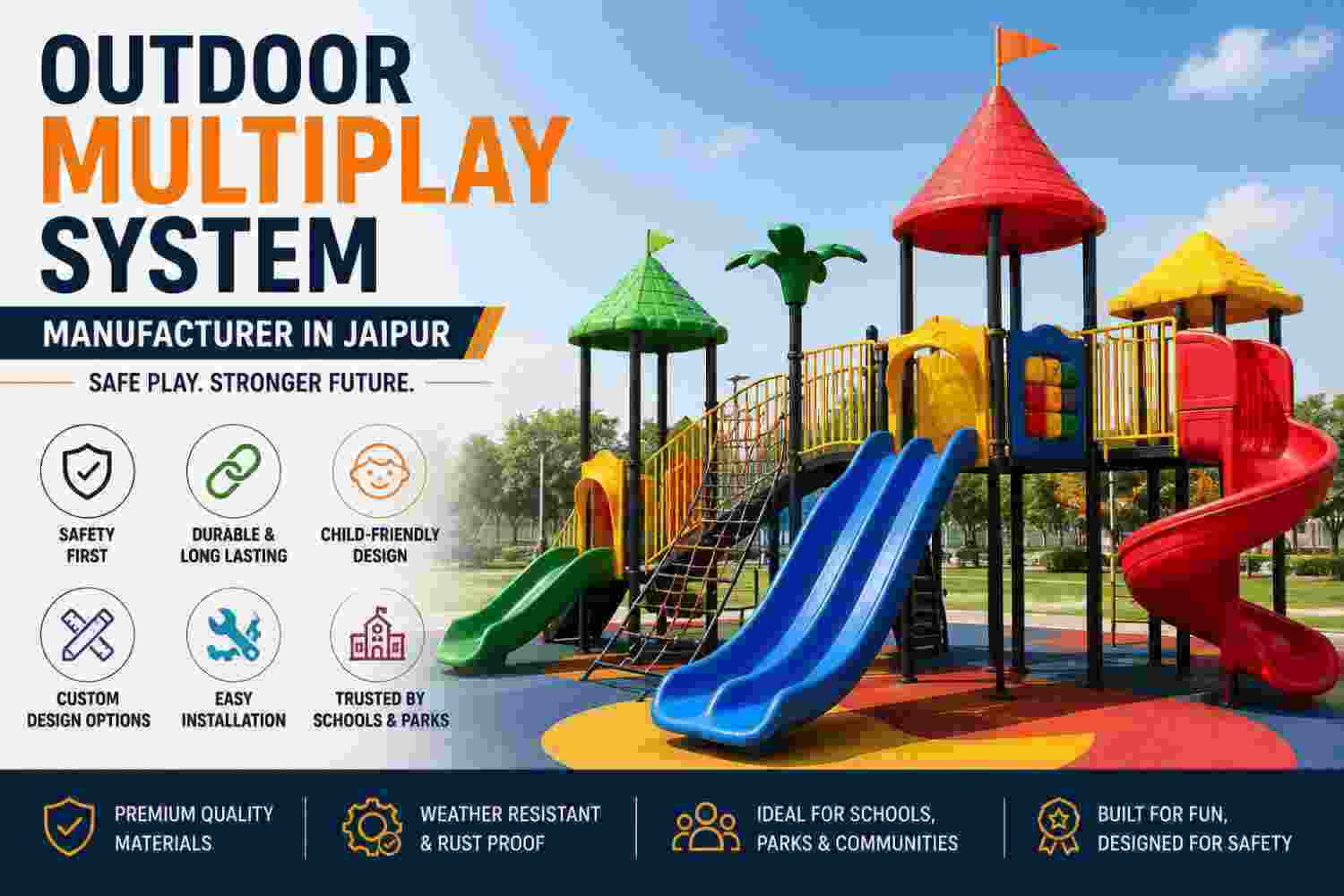
An outdoor multiplay system is a modular playground structure that combines multiple recreational activities into one connected play unit. It can include slides, climbing walls, rope ladders, monkey bars, crawl tunnels, bridges, swings, interactive panels, and other play elements.
These systems are designed to encourage physical activity, coordination, balance, exploration, social interaction, and imaginative play. They can be installed in schools, parks, residential communities, daycare centres, and other recreational spaces.
Why Are Outdoor Multiplay Systems Popular for Playgrounds?
Outdoor multiplay systems are popular because they bring several play activities together in a single structure.
Instead of installing individual pieces of equipment separately, a multiplay setup can combine different activities while making efficient use of the available playground area.
Key advantages include:
- Multiple activities in one structure
- Better use of available space
- Opportunities for active physical play
- Support for balance and coordination
- Encouragement of social interaction
- Modular and flexible configurations
- Suitable for different playground environments
What Activities Can Be Included in a Multiplay System?
A multiplay system can include a combination of slides, climbing elements, tunnels, bridges, and interactive activities.
Depending on the configuration, common play elements include:
- Straight slides
- Wave slides
- Spiral slides
- Tube slides
- Climbing walls
- Rope ladders
- Monkey bars
- Crawl tunnels
- Connecting bridges
- Swings
- Seesaws
- Interactive play panels
- Balance activities
The number and type of activities can be selected according to the available space, expected users, and intended age group.
What Materials Are Used to Manufacture Outdoor Multiplay Systems?
Different materials can be used for structural and play components depending on their function and environmental requirements.
Common materials include powder-coated galvanised steel, FRP, LLDPE, HDPE, and other engineering-grade plastics.
Why Is Galvanised Steel Used?
Galvanised steel can be used for the main structural framework because it provides strength and resistance to outdoor environmental conditions. Powder coating can provide an additional protective finish.
Why Is LLDPE Used in Playground Equipment?
LLDPE is commonly used for moulded playground components because it can provide a smooth finish, impact resistance, and suitable outdoor durability. UV-stabilised material can help components withstand prolonged exposure to sunlight.
What Is the Role of FRP?
FRP can be used for selected playground components where strength, durability, and resistance to environmental exposure are required.
How Does an Outdoor Multiplay System Support Child Development?
A well-designed play system can provide opportunities for children to develop physical and social skills through active play.
Climbing activities can encourage strength and coordination, while slides and bridges can support movement and balance. Interactive play areas can also encourage communication and imaginative activities.
Children can benefit from activities that encourage:
- Balance
- Coordination
- Climbing ability
- Physical strength
- Motor skills
- Social interaction
- Confidence
- Exploration
- Imaginative play
What Safety Features Should an Outdoor Multiplay System Have?
A playground system should incorporate safety-focused design features to reduce avoidable risks during normal use.
Important features can include:
- Rounded and smoothly finished edges
- Anti-slip platforms
- Secure hand grips
- Stable platforms
- Proper anchoring
- Weather-resistant materials
- Corrosion-resistant framework
- UV-stabilised components
- Safe connections between play elements
- Non-toxic and child-friendly materials
The overall playground should also be installed according to the manufacturer's requirements and applicable safety standards.
How Do You Choose the Right Size of Multiplay System?
The appropriate size depends on the available installation area, number of children, activities required, and desired playground layout.
Before selecting a system, consider:
- Available space
- Required circulation area
- Number of users
- Age group
- Number of play activities
- Platform heights
- Installation requirements
- Safety clearance
- Future expansion requirements
A compact system can be suitable for smaller spaces, while larger configurations can accommodate more activities and users.
How Many Children Can Use a Multiplay System?
The capacity depends on the size, configuration, number of platforms, and individual play elements.
Smaller configurations may be designed for approximately 5–10 children, while larger systems can accommodate 20–30 or more children depending on their design.
The expected number of users should be considered during the planning stage so that the equipment is appropriately sized for its intended environment.
What Platform Heights Are Available?
Platform heights can vary according to the design and intended age group.
Common configurations may include platform heights ranging from approximately 3 ft to 9 ft. Lower platforms can be suitable for younger users, while taller structures can provide more challenging play experiences.
The selected height should always be considered together with:
- Age group
- Slide design
- Access method
- Guardrails
- Platform dimensions
- Safety clearances
- Overall equipment configuration
Can Outdoor Multiplay Systems Be Customised?
Yes, Outdoor Multiplay System Manufacturer solutions can be configured according to the requirements of different playground projects.
Customisation can include:
- Number of slides
- Type of slides
- Platform height
- Climbing elements
- Tunnel configuration
- Bridge design
- Interactive panels
- User capacity
- Overall dimensions
- Material selection
Custom configurations can help make better use of the available space while providing activities appropriate for the intended users.
Why Is Modular Construction Useful for Playground Equipment?
Modular construction allows different playground components to be combined into one coordinated structure.
It can make the equipment more flexible because individual play elements can be arranged according to the available area and project requirements.
Another advantage is that modular systems can support easier maintenance and potential future expansion, depending on the original design.
Where Can Outdoor Multiplay Systems Be Installed?
Outdoor multiplay systems can be used in a wide range of recreational environments.
Typical locations include:
- Schools
- Public parks
- Residential communities
- Daycare centres
- Community recreation areas
- Institutional playgrounds
- Resorts
- Commercial recreational facilities
The equipment configuration should be selected according to the expected users, available area, environmental conditions, and level of usage.
How Do You Maintain an Outdoor Multiplay System?
Regular inspection and maintenance can help preserve the safety and serviceability of playground equipment.
Maintenance activities may include:
- Checking structural connections
- Inspecting anchors
- Examining slides and platforms
- Checking for surface damage
- Inspecting protective coatings
- Tightening loose fasteners
- Checking moving components
- Cleaning play surfaces
- Looking for signs of corrosion or wear
Regular inspections are particularly important in playgrounds that experience frequent daily use.
What Should You Check Before Buying an Outdoor Multiplay System?
Before purchasing, buyers should evaluate both the equipment and the supplier.
Important factors include:
- Material quality
- Structural strength
- Safety features
- Available configurations
- Dimensions
- User capacity
- Platform height
- Surface finishing
- UV resistance
- Corrosion protection
- Installation requirements
- Maintenance requirements
- Applicable standards
- Warranty and after-sales support
Providing the supplier with complete project details can make it easier to recommend an appropriate configuration.
Why Choose an Experienced Outdoor Multiplay System Supplier?
An experienced supplier can help buyers understand different configurations, materials, safety features, and installation requirements.
A reliable Outdoor Multiplay System Supplier should be able to provide information about product specifications, materials, dimensions, capacity, installation, and maintenance.
Technical assistance is particularly useful when planning large playground projects where multiple play elements need to work together within a defined area.
Can Outdoor Multiplay Systems Be Used for Large Playgrounds?
Yes. Larger playgrounds can use expanded configurations containing multiple slides, towers, bridges, climbing elements, tunnels, and interactive play features.
Large systems can be designed for environments with higher expected usage, such as public recreation areas, community parks, schools, and commercial play spaces.
The layout should provide sufficient space for movement between activities and appropriate safety clearances.
Can These Systems Be Used for Export Projects?
Yes, playground equipment can be supplied for domestic as well as international projects, depending on the manufacturer's capabilities and project requirements.
An Outdoor Multiplay System Exporter may provide export-oriented packaging, documentation, material information, and shipping support as required for international orders.
Export projects should clearly specify dimensions, materials, technical requirements, packaging, documentation, and applicable standards before production.
What Makes a Good Outdoor Multiplay System?
A good playground system should provide a balance between safety, durability, activity variety, space utilisation, and ease of maintenance.
Important characteristics include:
- Strong structural construction
- Durable materials
- Smooth child-friendly surfaces
- Secure anchoring
- Appropriate platform heights
- Multiple play activities
- Suitable user capacity
- Weather resistance
- Easy maintenance
- Proper installation
The final configuration should match the environment where the equipment will be installed and the needs of its intended users.
Conclusion
An outdoor multiplay system combines several recreational activities into one structured playground, providing children with opportunities for climbing, sliding, balancing, exploring, and social interaction.
From compact configurations to larger multi-activity structures, these systems can be designed around different spaces, capacities, materials, and play requirements. Proper material selection, structural stability, safety features, installation, and regular maintenance are important for long-term performance.
When selecting an Outdoor Multiplay System, buyers should consider the available space, expected number of users, age group, play activities, platform height, material requirements, safety features, and maintenance needs before making a decision.